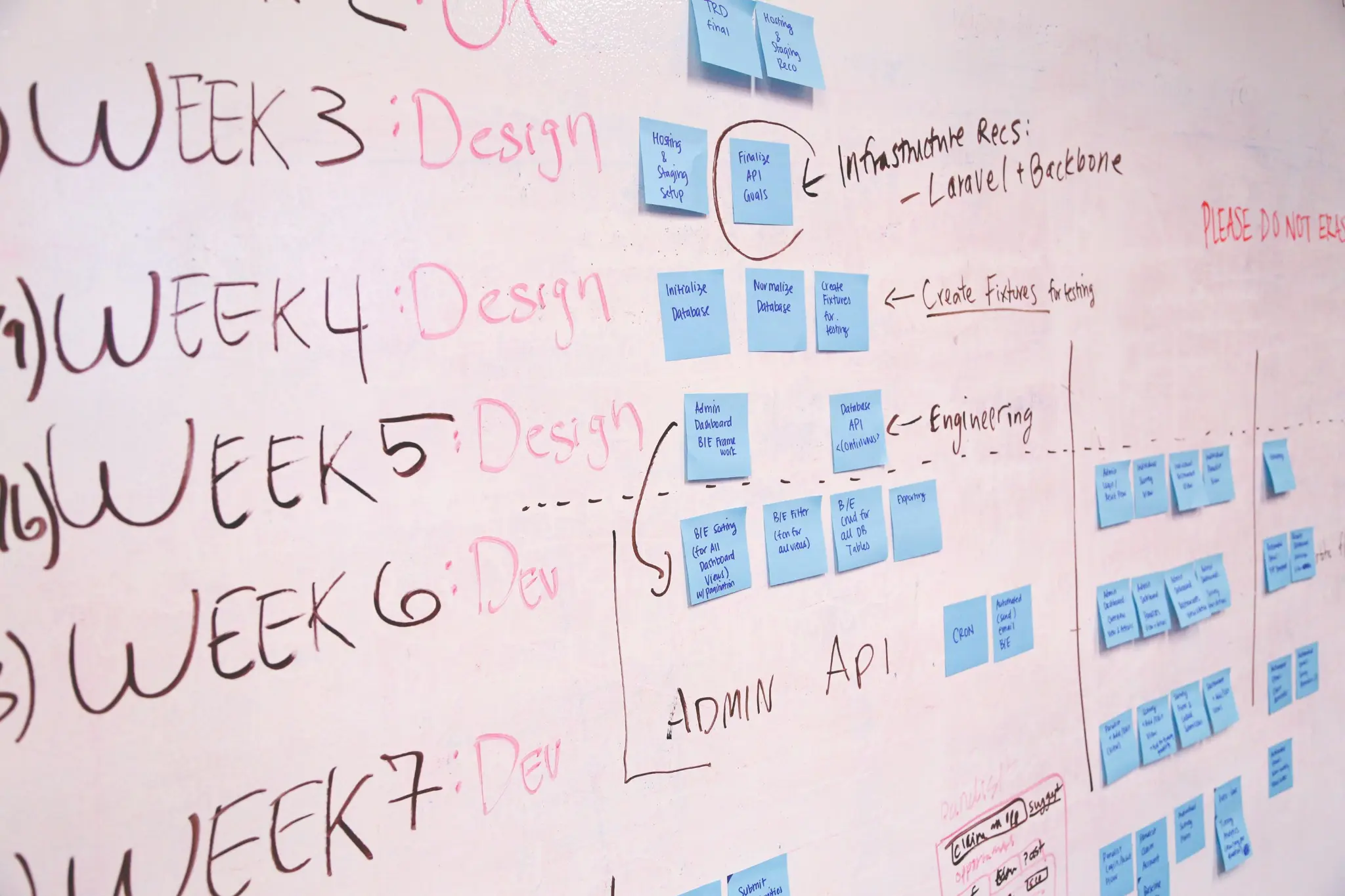
There's a narrative going around: describe what you want, and AI handles the rest. You get software.
In practice? That's not how it works. Especially not if your team doesn't already know how to build software properly.
AI is writing code. A lot of code. But building software means actual software. Software that works in production, that scales, that doesn't break three months later. That still requires the same structure and thinking it always has.
You don't just say "build me a SaaS platform" and hope for the best. You need a team that knows what they're building, why it matters, which features come first, and how users will actually interact with it.
The process hasn't changed.
At a Practical Level
Building software is still building software.
You start with a product owner who understands what you're trying to do. They break the system into features, define how users will interact with it, and figure out the sequence. Then the team works through three foundational layers — each one building on the last:
This is the foundation. Everything that follows depends on getting this right. These processes are what experienced engineering teams bring to the table. They make a massive difference as to whether your software actually works in the real world.
What's Actually Changed
AI is now woven into every step of this process. But AI does not replace the process.
When you're planning work, AI can help analyze requirements, spot gaps, and explore implementation approaches. When you're building, it can help you think through different solutions and generate the code once the plan is solid. When you're reviewing, it flags issues and suggests improvements.
But in every case, your team is still responsible for the outcome. The decision-making doesn't disappear. It just gets faster.
Planning Still Comes First
This is where I see teams go wrong. They want to start writing code. Experienced teams don't. They start by planning.
That means working through four questions before a single line of code gets written:
How does it actually work today? Where are the real constraints, not just the assumed ones?
Not everything is broken. Knowing what to leave alone is as important as knowing what to fix.
Decide how new features fit into the existing architecture before writing the first prompt or the first line.
What could go wrong? What depends on what? Surfacing this early prevents the expensive surprises later.
AI can help you explore these questions and refine your thinking. But the decisions are still made deliberately, by people who understand the context.
AI supports the process. It doesn't replace the thinking.
Code Review Isn't Different
When code gets generated, it doesn't just get merged.
It goes through the same review process as any developer's work. The team is looking at:
- Does this actually do what we intended?
- Is it readable? Will someone understand it in six months?
- Does it introduce any performance or security problems?
- Is it consistent with how the rest of the system works?
Reviewing AI-generated code is like reviewing a junior developer's work. You're not checking whether the code runs. You're checking whether it's right.
Testing and Validation Still Matter
Features get tested against their acceptance criteria. Teams also look at how they work in practice. They check whether they actually align with how users will interact with the system, not just whether they technically function.
AI can help you generate test cases and spot gaps. But validation requires judgment. You need to know what "correct" actually looks like for your system.
The Real Shift
The structure of your team hasn't changed. You still need product thinking. You still need engineering judgment. You still need people who care about quality.
What has changed is the leverage each role has.
Product owners can define requirements more quickly and clearly. Developers can move through implementation faster. QA can identify gaps earlier.
Each role becomes significantly more effective. But that only works if the underlying process is already strong.
If your team doesn't know how to break down features, define acceptance criteria, or review code properly, AI doesn't fix that. It just exposes it faster.
How This Actually Works
This is how we approach it at Iversoft.
We've built these practices across projects and teams, and now we layer AI into each step to move faster without sacrificing quality. We still define features. We still plan implementations. We still review code. We still validate outcomes.
The difference is that each part of that process is now faster and more efficient.
The Bottom Line
AI doesn't remove the need for a development process. It makes the process more important.
The teams that get the most out of AI aren't skipping steps. They're executing a well-defined process more efficiently.
If that process isn't already in place, AI doesn't fix the gap. It just exposes it.