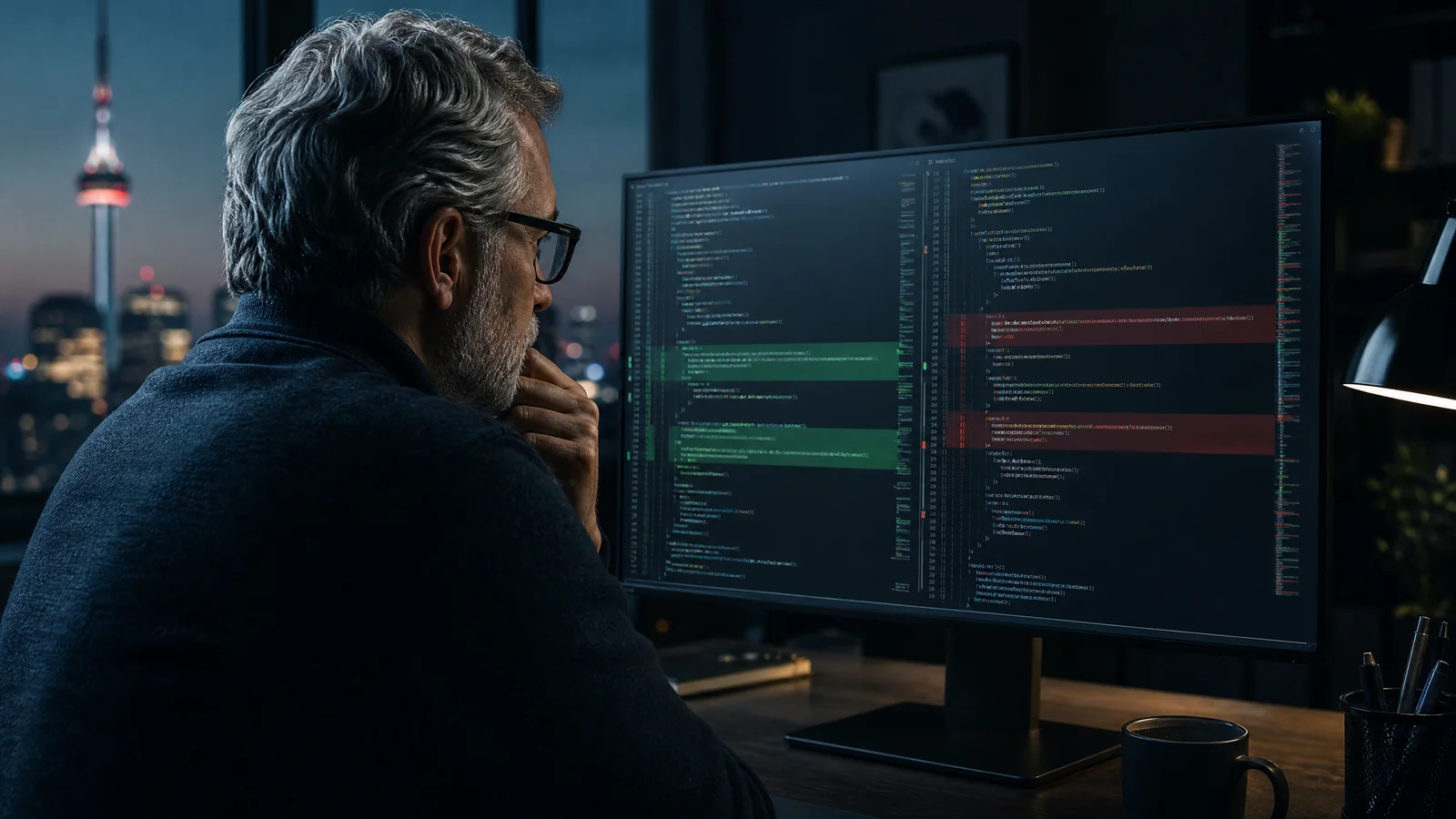
AI writes code fast. That’s not the problem.
The problem is that fast code isn’t the same as correct code. And most teams are learning this after the code ships, not before.
Speed with accountability. That’s what responsible AI looks like. And code review is how you get there.
Why Review Is Now Critical
Before AI, writing code was the slow part. Review was overhead. Something you did because process required it, not because it felt urgent.
AI flipped that. Writing code is now fast. The constraint moved to verifying that the code is actually correct, secure, and maintainable.
That makes review the most important step in your workflow. Not a bottleneck. Not overhead. The critical gate between “code that runs” and “code that works in production.”
AI-generated code carries more subtle defects than human-written code. More logic bugs. More missed edge cases. Some get caught by tests. Many don’t.
Tests verify that code runs. Review verifies that code is right.
What Review Catches That AI Misses
AI is good at patterns. It’s not good at context.
It can produce code that’s technically sound but operationally wrong. It doesn’t understand your business logic. It doesn’t know what “correct” means for your specific system. It misses architecture tradeoffs that matter six months from now.
A human reviewer asks the questions AI can’t answer: Why was it done this way? What about this edge case? Does this fit our architecture? Is this consistent with how the rest of the system works?
Business context
Review tests whether the code is right for the operational reality of your specific system, not merely technically valid.
Architecture fit
Review reveals tradeoffs and inconsistencies that can become costly when the system needs to evolve six months from now.
Those questions matter. Especially when the code was written by something that can’t explain itself.
Review Is Knowledge Transfer
Here’s the part that gets overlooked: code review isn’t just quality control. It’s how teams build shared understanding of their systems.
When a human writes code, they understand it. They can explain it. That understanding spreads through review. The reviewer learns the system. The team builds institutional knowledge.
With AI-generated code, that transfer breaks. AI wrote it. Nobody on the team fully understands it unless someone forces the explanation.
This is a real risk. If your team doesn’t understand what’s running in production, you can’t fix it when it breaks. You can’t evolve it. You’re dependent on AI to maintain code that nobody owns.
Review fixes that. Someone reads the code. Someone understands it. Someone can explain it to the rest of the team. That’s not overhead. That’s how you maintain control of your own systems.
How We Do This at Iversoft
We use AI extensively. It helps us move fast. But we’ve actually gotten more rigorous about review, not less.
Every AI-generated feature comes with context: what we asked for, what the code does, how it fits into the existing system. A human reviewer validates it against our acceptance criteria. They check the architecture. They verify the tests catch the right things.
Then they make sure the team understands what shipped.
That takes more time than just merging AI output. But it’s the only way to get both speed and accountability.
The Bottom Line
There’s a narrative that says AI is good enough now that we can trust the output and skip review. That’s backwards.
AI being good at writing code is exactly why review matters more. The code looks right. It’s polished. It passes tests. That doesn’t mean it’s correct for your system.
Responsible AI adoption isn’t anti-AI. It’s deliberate about where human judgment happens. You let AI handle execution. You keep humans handling verification, context, and accountability.
Review is where that judgment lives. Skip it and you’re not moving faster. You’re just shipping risk.